

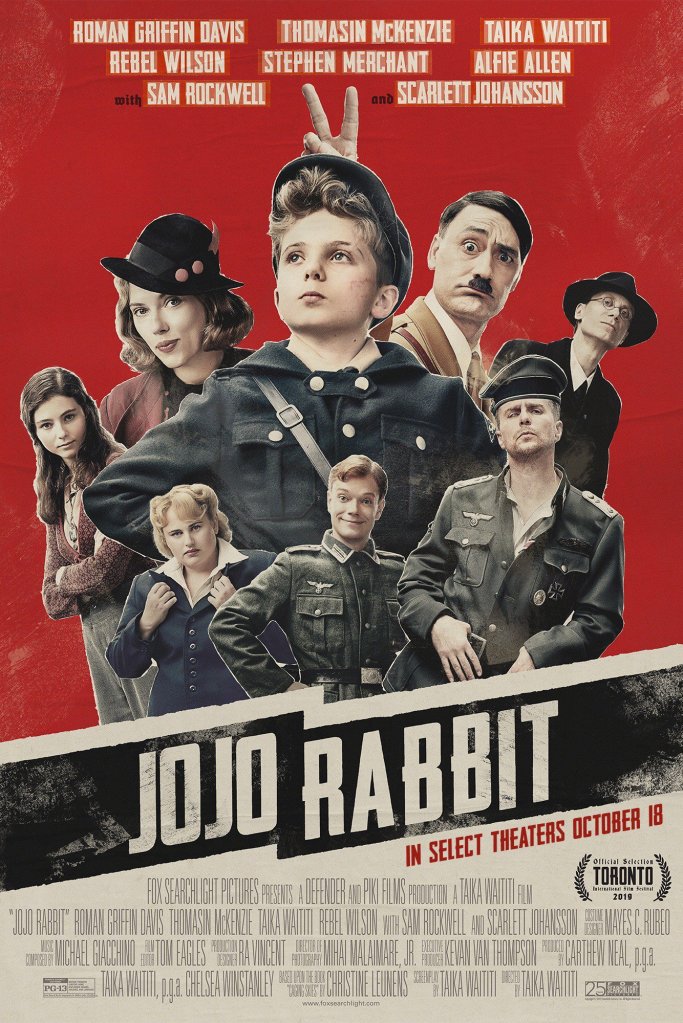
‘Let everything happen to you. Beauty, terror. Just keep going. No feeling is final.’ This quote by Rainer Maria Rilke, a renowned poet from the 20th century, sums up the emotions of a film, which is one of the best hipster Nazi comedy films I’ve ever seen. It all started with Charlie Chaplin’s “The Great Dictator” in 1940, which dismantled the ruthless image of the Nazi commander, Adolf Hitler. After that, the one that stood out for a Nazi comedy was “Inglourious Basterds” by Quentin Tarantino in 2009. It’s been long since we’ve witnessed a movie that portrays the war ridden Deutschland in an immaculate manner and gives us the laughs of a comedy movie whilst also making thought provoking statements throughout the film. Let’s dive deep into the world of the little Nazi, Jojo Betzler a.k.a Jojo Rabbit.
Summary
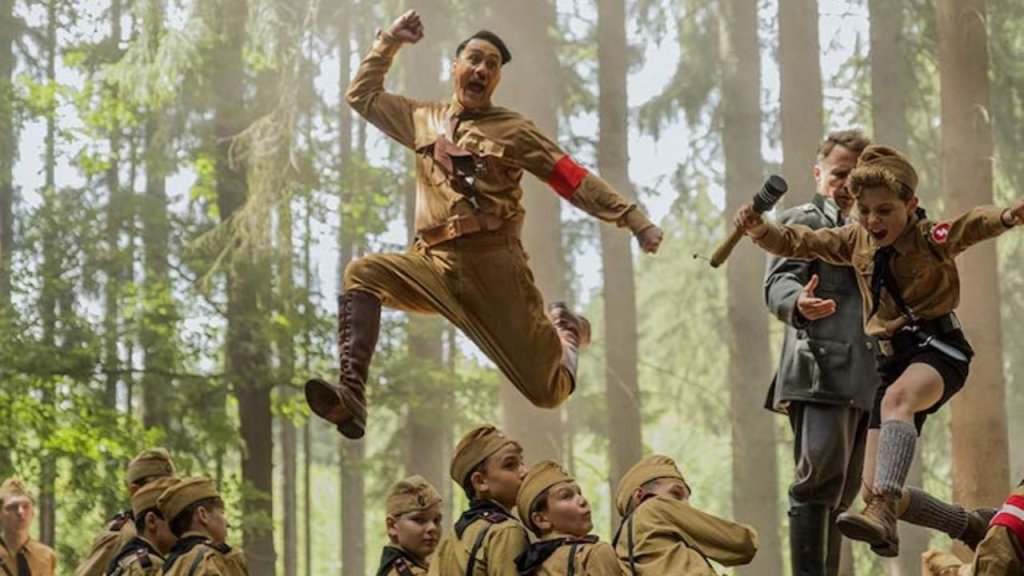
Jojo Rabbit, a 2019 Academy Award winner, American comedy-drama, is directed by Taika Waititi and stars Roman Griffin Davis (Jojo Betzler), Scarlett Johansson (Rosie Betzler), Thomasin McKenzie (Elsa Korr), Sam Rockwell (Capt. Klenzendorf) and Taika Waititi (Imaginary Adolf Hitler) in the lead roles. The story is about Jojo Betzler, a 10 year old German Nazi boy, who appears to be tough, but is as scared as a bunny, and has a constant imaginary friend in Adolf Hitler, whose ideals and belief of the great Aryan race is imbibed in the mind of Jojo. He lives with his mother Rosie, who is unlike Jojo and doesn’t believe in war, waiting for his husband and her lost daughter Inge. The story takes a twist when Jojo finds out that his mother is hiding a Jew in the house.
The Plot
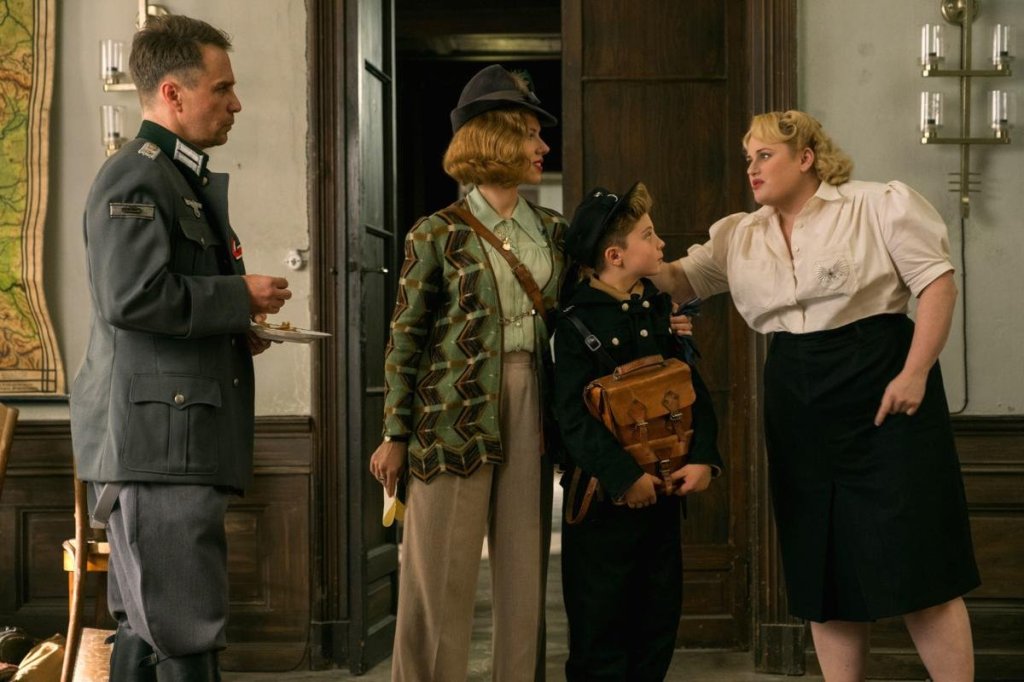
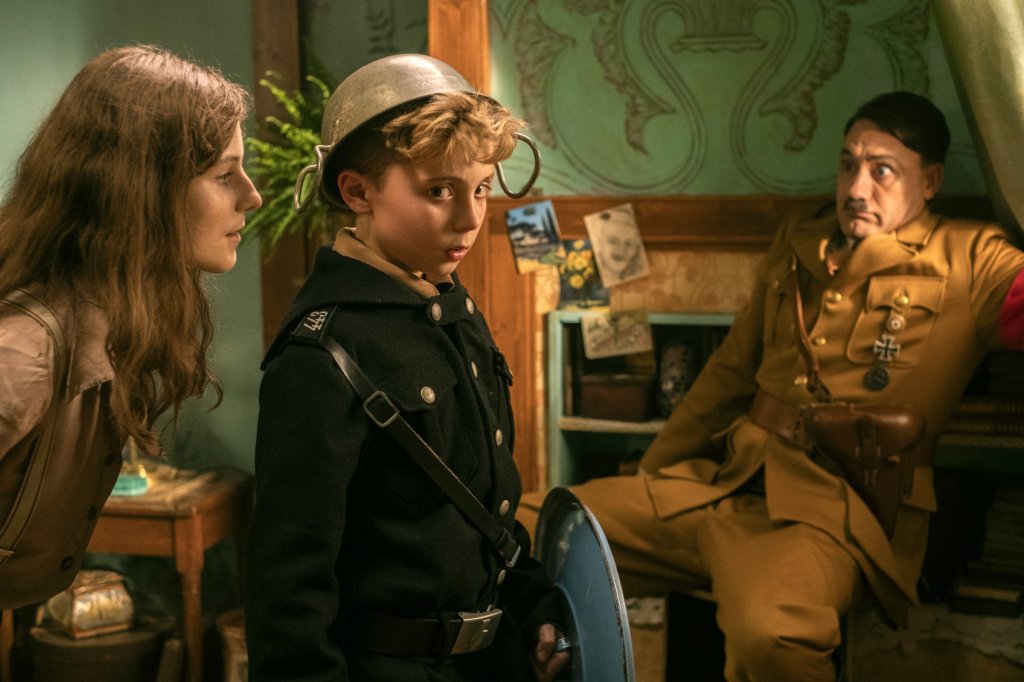
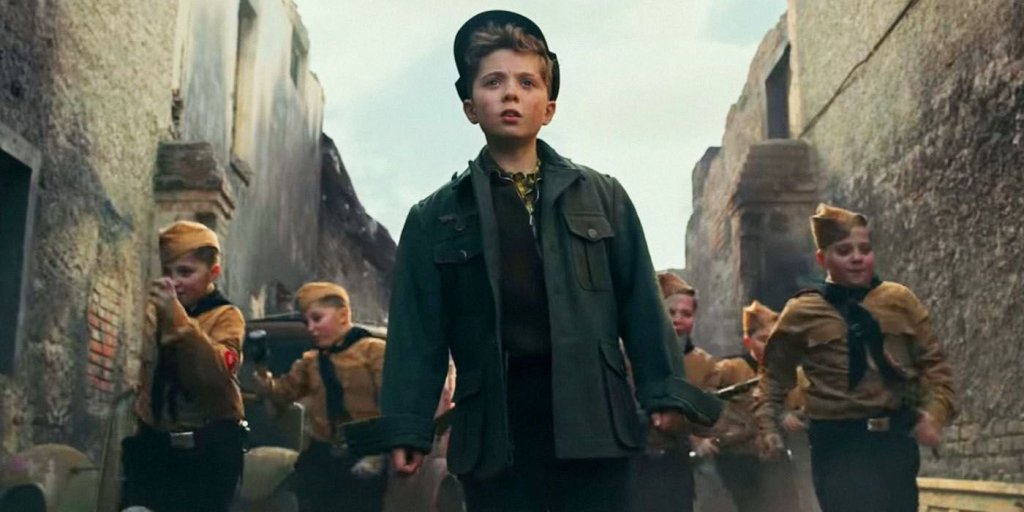
Jojo Betzler, a 10 year old German boy, a Nazi fanatic and the believer of the the great Aryan race, is lonely and lives with his mother, Rosie, while his father is away fighting war for his motherland. Jojo lacks courage while his only imaginary companion is Adolf Hitler. He has a brief incident that lands him the title “Jojo Rabbit”. During the military training for the young boys of the town, Jojo is asked to kill a rabbit by twisting his neck. Jojo is naturally scared, although he acts as if he is the only brave soldier in the camp, and yet he cannot hurt the creature, which in turn lends him the name Jojo Rabbit. To all this, Adolf says, ‘The rabbit is no coward. The humble little bunny faces a dangerous world every day, hunting carrots for his family and for his country.’ This statement makes little Jojo believe in himself and that he can rule the world by being a rabbit, and with all the enthusiasm, he gets into an ugly accident and bursts a grenade onto himself, scarred forever. Now that he’s both coward and scarred, it is but natural to take that upon at someone who is perhaps the biggest enemy of the Nazis, a Jew. When he finds out about Elsa, a teenage Jewish girl, running from the Nazis all her life and ending up in the cupboard of Rosie’s house, he is both shocked and threatened by a mere presence of a Jew. As the story progresses, young Jojo sees a completely different picture of Elsa from what he has heard about Jews. She doesn’t have horns or tails, and she doesn’t sleep like a bat. Once Jojo asks her, ‘So, I’d like you to draw a picture of where Jews live.’ After a brief conversation, Elsa hands over the paper which has the picture of the head of Jojo with a scar. Jojo is humiliated and angrily says, ‘I said to draw a picture of where Jews live. This is just a stupid picture of my head.’ Elsa replies, ‘That’s where we live.’ So, how does the relationship evolve and what are the consequences for a Nazi to share a house with a Jew? Watch the movie to find out.
Technical aspects
The one thing that you’ll notice from the first scene, is the cinematography and art direction. Beautifully designed sets of 1940’s Deutschland and perfectly captured imagery and scenic beauty of Germany. The VFX, headed by Jason Chen, has done a wonderful job executing the war sequences and the explosions that look real and make you emotionally involved in the film. Talking about the score and songs, they have aptly used the BGM with humorous tunes and rock and roll music for war sequences, which gives us the indication of why this movie gets into humour and at the same time, plays it safe. The screenplay is adapted by Taika Waititi from the book “Caging Skies”, and has won an Academy Award for the same. Fun fact, there’s a scene in the film where the phrase, “Heil Hitler” is used 31 times within a span of around 2 minutes. The performances of all the actors have been top notch. Starting with Roman Griffin Davis as Jojo, he has captured the innocence and vulnerability of a 10 year old with perfection and is solid throughout. Scarlett Johansson as Rosie is as gorgeous and brilliant as you’d expect. Her scene with Jojo where she plays her father is one great sight to behold. The support cast play their parts very well, but a special mention to Taika Waititi, who nails the mannerisms and tone of Adolf Hitler. So, a big thumbs up on casting, screenplay, score, set design and cinematography. The one thing that it lacks is the rawness and quirky feel that a Quentin Tarantino film has, although not comparable, but you’d expect the direction to be more adventurous in a film like this. This film has played it safe and its visible to the audience.
Conclusion
Watch it for the wonderful acting and a fresh approach to cinema. The film has got all the ingredients to be called a blockbuster comedy-drama. Although it could have been better in terms of comedy and a little experiment with the world war as a backdrop, the potential and hardwork behind every scene is visible and is praiseworthy. And one last thing, ‘ Don’t say Heil Hitler, say f*** you Hitler’.
 Cinema Central